
Humanoid Robot Breaks Bolt's 100m Record Amid Questions About the Future of Warfare
Humanoid robot breaks Bolt's 100m record.. and Gazprom sets a new record in gas supplies to China via the Power of Siberia pipeline.
Story
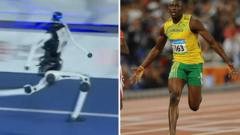
In a scene that might seem straight out of a science fiction film, a humanoid robot managed to break the world record of legendary Jamaican sprinter Usain Bolt in the 100-meter race, as reported by the British Broadcasting Corporation (BBC) in a video clip documenting the moment the robot covered the distance in just 9 seconds.
This unprecedented athletic achievement, which took place on August 22, did not occur in isolation from a broader context, as this qualitative leap in the capabilities of humanoid robots coincides with growing questions about the potential use of this technology on the battlefield. A report by Al Jazeera English, aired on August 24, addressed a critical issue: Do humanoid robots represent the future of warfare?
This question comes at a time when these robots are undergoing rapid development, not only in the sports field where they have broken records, but also in the military domain, where they are increasingly being developed and tested for combat purposes. Observers believe that this dual development places the international community before a new ethical and legal dilemma regarding the limits of using these machines in armed conflicts.
In a related context of modern technologies but on a completely different level, Russian energy giant Gazprom announced on Sunday, July 26, a new historical record in daily natural gas supplies to China via the Power of Siberia pipeline.
The company stated, in a statement reported by Sputnik from Moscow, that it achieved this new record as part of enhancing energy cooperation between the two countries, a step reflecting the growing strategic partnership between Moscow and Beijing in the energy sector.
These successive developments, whether in the field of humanoid robots or the energy sector, raise wide-ranging questions about the nature of the future we are shaping with our own hands. While the robot amazes us with its ability to surpass the fastest runner in history, the most important question remains: Are we truly ready for a world where machines share roles with humans that were once exclusive to humanity alone?